
NVIDIA Rubin 45°C Liquid Cooling
Learn how NVIDIA Rubin uses 45°C liquid cooling to reduce cooling demand, limit water use, and support denser AI data centers.
|
NVIDIA RUBIN LIQUID COOLING Why NVIDIA Rubin’s 45°C Liquid Cooling Could Change AI Data Centersjdq Warm coolant may help future AI systems use less cooling power, reduce direct water demand, and fit more computing into each rack. Published July 13, 2026 | Original editorial analysis |
NVIDIA Rubin 45°C Liquid Cooling
Key Facts
|
45°C Warm liquid inlet target reported by NVIDIA. |
100% NVIDIA’s description of Rubin liquid cooling coverage. |
Closed loop Coolant may be reused with low direct water demand. |
Introduction
Artificial intelligence is placing a new kind of pressure on data centers. The newest AI systems can perform far more work than earlier machines, but they also produce far more heat inside a small space. Moving that heat away from processors has become a major design problem.
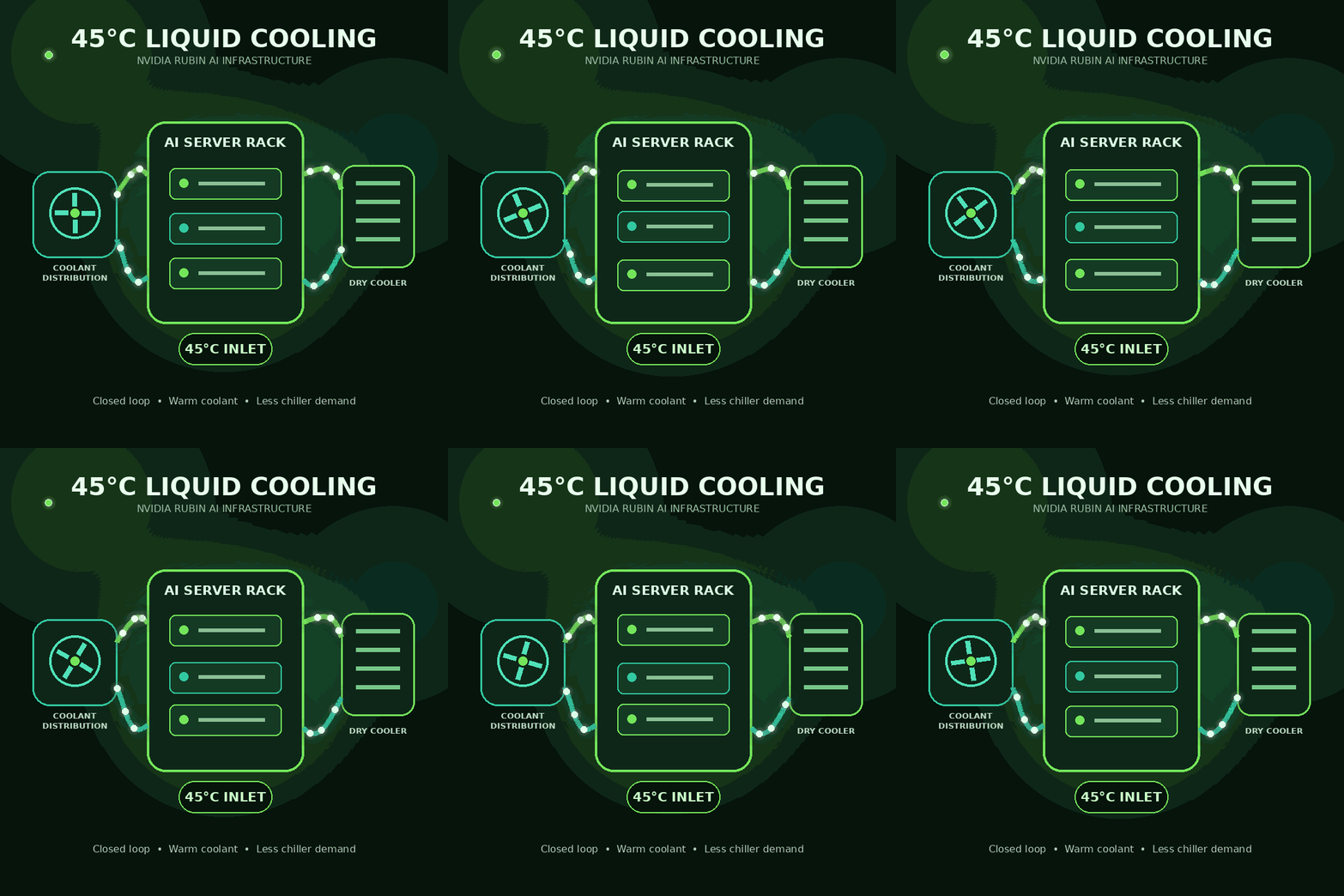
NVIDIA says its Rubin generation infrastructure can use liquid coolant that enters the rack at up to 45 degrees Celsius, or 113 degrees Fahrenheit. That may sound unusually warm for cooling. In practice, the higher temperature can make it easier for a facility to release heat into outdoor air without running large mechanical chillers for much of the year.
The idea is simple, but the engineering is not. Rubin moves toward a system where liquid cools the compute and networking equipment directly. NVIDIA also connects the design to its DSX platform, which provides guidance for planning and operating large AI facilities.
Why AI Servers Need a New Cooling Plan
Traditional servers use fans to pull cool air across processors, memory, power parts, and network equipment. Data center operators arrange racks into cold aisles and hot aisles so that cool supply air and warm exhaust air do not mix. This method has worked for decades, but AI racks are becoming much more powerful and much denser.
Air does not carry heat as well as liquid. As rack power rises, operators need larger fans, more air movement, and more room for cooling equipment. These systems consume electricity and can add noise, maintenance needs, and limits on rack density.
Liquid cooling captures heat closer to the source. A metal cold plate sits on a hot chip. Coolant passes through small channels inside the plate, absorbs heat, and carries it away. A coolant distribution unit then transfers that heat between the equipment loop and the wider facility loop. This direct path can remove heat with less dependence on cold room air.
What 45 Degrees Celsius Really Means
The 45 degree figure refers to the temperature of the liquid entering compatible equipment. It does not mean that the processors run at 45 degrees. Chips remain much hotter than the incoming fluid, and the cooling system must keep every device within its approved operating limit.
According to NVIDIA, coolant may enter a fully liquid cooled system at 45 degrees Celsius and leave at about 55 degrees after collecting heat. Cold plates, flow rates, materials, pumps, seals, and control software must all work together so that hot spots remain under control.
This is an important difference from older liquid cooled servers. Many earlier systems used liquid for the main processors but kept fans for memory, networking, power parts, or other components. NVIDIA describes the Rubin design as 100 percent liquid cooled, including compute and networking trays. The company also says the design can remove the need for fans inside those trays.
Why Warmer Coolant Can Lower Cooling Demand
A cooling system does not destroy heat. It moves heat from the chips to another place. The final step is called heat rejection, which usually means releasing the heat into outdoor air or into water that later releases it through a cooling tower.
Warmer coolant gives the facility a larger chance to reject heat directly through dry coolers. A dry cooler works like a large outdoor radiator. Fans move outside air across coils, while fluid carries heat through the coils. When outdoor conditions are suitable, the system can release heat without making chilled water.
Mechanical chillers use compressors and other equipment to produce colder water. They are useful when a facility needs low temperatures, but they can require a large amount of power. A system designed for 45 degree liquid may reduce the number of hours when chillers are needed. In cooler places, a carefully designed facility may be able to operate without normal refrigeration for long periods.
This does not mean every site will become chiller free. Local temperature, humidity, air quality, equipment design, safety margins, and backup plans still matter. A site in a cool region has a different operating profile from a site that faces long periods of extreme heat.
How Full Liquid Cooling Changes the Rack
A full liquid approach changes more than the cooling plant. It also changes the server itself. Parts that once depended on airflow need cold plates, thermal connections, or liquid paths. Engineers must route coolant through the system without blocking service access or creating too many connections.
NVIDIA says the Rubin rack architecture uses fanless compute and switch trays and is designed for warm water inlet temperatures. Removing large internal fans can reduce server noise and free space that would otherwise be used for air channels and heat sinks. That can help place more computing equipment into the same rack area.
Higher density can be valuable where land, floor space, and electrical capacity are limited. It can also create new demands. Pumps, manifolds, hoses, sensors, valves, and leak controls become critical parts of the system. Staff need training, maintenance plans, and spare components that match the liquid cooling design.
Water Savings Need Careful Context
NVIDIA says the DSX reference design can support a closed loop with almost no ongoing cooling water use when dry coolers provide heat rejection. In this type of system, the water and glycol mixture is filled, circulated, and reused instead of being consumed through evaporation in a cooling tower.
That could reduce direct water demand at the facility, especially when compared with cooling tower designs that lose water through evaporation. It may also help data center projects in areas where water supply is limited or where local communities are concerned about industrial water use.
The claim still needs context. A closed cooling loop does not remove every form of water use linked to AI. Water may be used to produce electricity, manufacture chips, build equipment, clean facilities, and support other site systems. A data center may also need backup cooling or occasional water based support during unusual weather.
For this reason, operators should report both direct site water use and the wider water footprint connected to power and supply chains. The strongest environmental case will come from measured results at real facilities, not only from design targets.
The Role of NVIDIA DSX
NVIDIA presents DSX as a platform for designing, simulating, building, and operating AI factories. In NVIDIA’s language, an AI factory is a data center designed mainly to produce AI training and inference output at large scale.
The DSX reference design connects computing systems with networking, storage, power, cooling, control systems, and facility planning. It also uses digital models so builders can test layouts, thermal behavior, power use, and operating rules before construction is complete.
This wider approach matters because cooling cannot be planned alone. A rack may perform well in a laboratory but still create problems if the building cannot provide the right flow, pressure, power, or heat rejection. Coordinated design can reduce late changes and help operators understand how the full facility behaves under changing AI workloads.
Benefits for Data Center Operators
The most direct benefit is the chance to use less energy for cooling. When a facility can rely more on dry coolers and less on chillers, more of its electrical supply can support computing instead of heat removal.
A second benefit is density. Liquid can carry heat away from powerful components without the large air paths needed by traditional servers. This can allow more compute in a smaller space, although the site must still support the related power and liquid flow.
A third benefit is lower noise inside the equipment area. Removing server fans can make maintenance spaces easier to work in, though pumps and outdoor fans will still create some noise.
Warm liquid also makes heat reuse more practical. The return fluid carries heat at a temperature that may be useful for nearby buildings, hot water systems, industrial processes, or district heating. Heat reuse depends on local demand, distance, regulation, and the cost of connecting the systems.
Costs, Risks, and Practical Limits
Liquid cooling is not a free upgrade. Existing facilities may need new pipes, coolant distribution units, pumps, controls, heat exchangers, and outdoor heat rejection equipment. Some older buildings may not have enough room or structural support for the changes.
Leaks are another concern. Modern systems use sensors, tested connectors, pressure controls, and isolated loops, but operators still need clear response plans. Coolant quality must be checked because corrosion, contamination, or the wrong chemical balance can damage equipment and reduce heat transfer.
The supply chain also matters. A full liquid rack depends on compatible parts from server makers, cooling companies, facility contractors, and control system providers. A problem in any part of that chain can affect deployment or service.
Finally, lower cooling demand does not make AI computing low energy. The processors still use large amounts of electricity. Better cooling can reduce overhead and help a site use power more effectively, but it does not remove the need for cleaner electricity, strong grid planning, and transparent reporting.
Why This Development Matters
AI infrastructure is moving from individual servers toward complete rack scale systems. That shift forces chip makers, server builders, and facility teams to design together. Cooling is now part of the computing platform, not just a building service added later.
NVIDIA Rubin’s 45 degree liquid cooling target is important because it raises the temperature at which advanced AI hardware can accept coolant. This can widen the range of weather conditions where dry cooling is useful and can reduce dependence on cold water production.
The long term effect will depend on real deployments. Operators will need to show energy use, water use, uptime, maintenance cost, and performance across different climates. If those results match the design goals, warm liquid cooling could become a standard feature of high density AI data centers.
Conclusion
NVIDIA’s Rubin cooling design turns a familiar idea upside down. The coolant is warmer, but the facility may need less energy to move heat outdoors. By bringing liquid to more parts of the rack, the system may also reduce fans, noise, direct water use, and space used for air cooling.
The benefits are promising, but they are not automatic. Climate, building design, equipment cost, maintenance skill, electrical supply, and backup systems will shape the result at each site. Claims about near zero cooling water should also be separated from the wider water and energy footprint of AI.
Even with those limits, the direction is clear. As AI chips grow more powerful, cooling must become part of the core system design. Warm liquid loops, dry coolers, and coordinated facility planning offer a practical path for handling more computing without allowing cooling overhead to grow at the same rate.
Frequently Asked Questions
What is NVIDIA Rubin liquid cooling?
It is NVIDIA’s approach for cooling Rubin generation AI systems with liquid that passes through cold plates and other liquid cooled parts. NVIDIA says the rack design can cool compute and networking trays without internal server fans.
Why can the coolant enter at 45 degrees Celsius?
The cold plates and liquid flow are designed to keep chips within approved limits even when the incoming fluid is warm. The temperature difference between the chips and coolant still allows heat to move into the liquid.
Does 45 degree liquid cooling remove the need for chillers?
It may reduce or remove chiller use during suitable weather, but the answer depends on climate, system design, safety margins, and backup requirements.
Can a closed loop data center use no water?
A closed loop with dry coolers may use very little ongoing water for cooling. This does not remove water used in electricity production, chip manufacturing, construction, or other site activities.
What is the NVIDIA DSX AI factory platform?
DSX is NVIDIA’s platform and reference design approach for coordinating AI computing, networking, power, cooling, simulation, and facility operations.
Sources and Editorial Note
1. NVIDIA Blog, 45°C liquid cooling for AI factories
2. NVIDIA Newsroom, Vera Rubin DSX AI Factory reference design
3. NVIDIA Blog, GTC Taipei and Vera Rubin MGX architecture
4. NVIDIA DSX platform overview
5. Schneider Electric, single phase and two phase direct to chip cooling
6. ENERGY STAR, raising data center temperature
7. ASHRAE, AI data center integrated design principles
8. ASHRAE, energy and thermal efficiency for AI data centers
Sources include NVIDIA’s June 21, 2026 blog post, Vera Rubin and DSX announcements, Schneider Electric technical guidance, ENERGY STAR, and ASHRAE. NVIDIA-specific performance and water claims remain attributed to the company. This independent article uses product names only for identification and does not reproduce NVIDIA media or text.